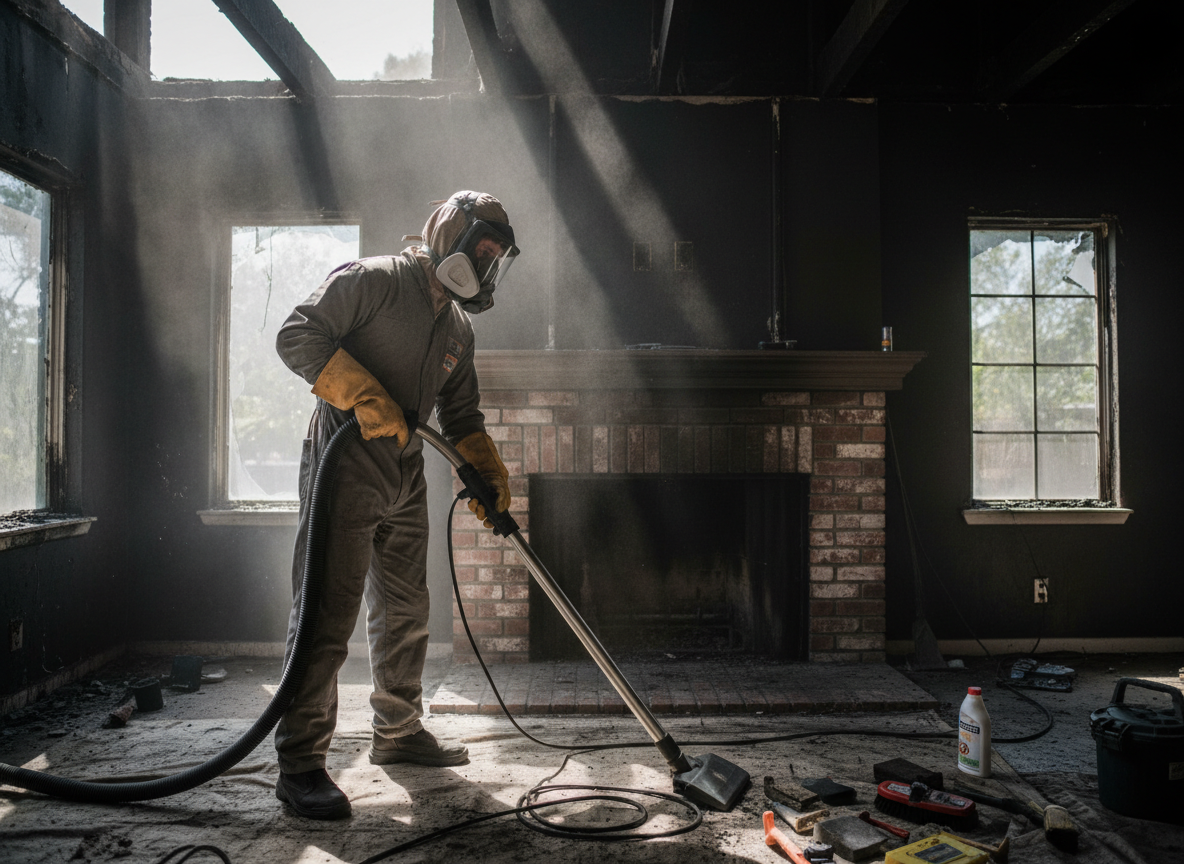
Soot from structure fires or nearby wildfires settles into the porous stucco and older drywall common in Granada Hills and Knollwood neighborhoods. The warm Mediterranean climate with hot summers pulls smoke particulates deeper into insulation and HVAC systems before residents notice discoloration on walls near O'Melveny Park or Granada Hills Recreation Center. Technicians must distinguish between oily soot from synthetic furnishings and dry soot from wood, because each requires different pH-neutral cleaners to avoid etching surfaces. In Los Angeles County homes built before modern fire codes, concealed voids behind cabinets often trap residue that later causes corrosion on copper wiring and metal fixtures.
Edge cases arise when wind carries ash from fires in Porter Ranch or Northridge into Mission Hills properties, leaving fine particles that standard vacuuming misses. Homeowners sometimes attempt DIY cleaning with household degreasers, which can drive soot further into carpet padding and force full replacement later. Proper containment with negative air machines prevents cross-contamination between rooms, especially important in multi-story homes where soot migrates upward through stairwells. Technicians document pre-existing conditions such as water stains from prior rains to separate fire-related damage from seasonal issues.
Code considerations in Granada Hills require verification that cleaning agents meet local air-quality standards before disposal, since runoff can affect soil near the area's hilly terrain. Specialized equipment like ultrasonic cleaners handles delicate items like electronics and artwork that residents store in garages exposed to mild winter humidity. Failure to address embedded soot in ductwork often leads to recurring odors months after the initial event, particularly when summer heat reactivates volatile compounds.
Technician insight
In Granada Hills, the thing that catches most people out with soot removal is how hot summer days push smoke residue deep into the stucco and single-pane windows typical of homes near O'Melveny Park, so surface wiping alone never works.
Soot Migration in Knollwood Residence
Smoke from a nearby structure fire entered a Granada Hills home through open vents. Inspection revealed oily soot coating inside HVAC returns and behind kitchen cabinets. Technicians contained the space, cleaned ducts with specialized solvents, and treated hidden voids. The home passed air quality testing with no recurring odor.
How it works
- 1
Initial Assessment
Inspect all affected rooms and HVAC systems to map soot migration patterns specific to Granada Hills construction.
- 2
Containment Setup
Isolate work zones with plastic sheeting and negative air pressure to protect unaffected areas like those near Knollwood.
- 3
Surface Cleaning
Apply appropriate solvents and agitation methods to walls, ceilings, and contents without damaging original finishes.
- 4
HVAC and Hidden Space Treatment
Clean ducts and voids where soot accumulates due to the region's temperature swings.
- 5
Final Verification
Test surfaces and air quality to confirm removal before returning the property to normal use.
Pricing
Costs depend on square footage affected, soot type, and whether HVAC cleaning is required; upfront quotes provided after inspection.