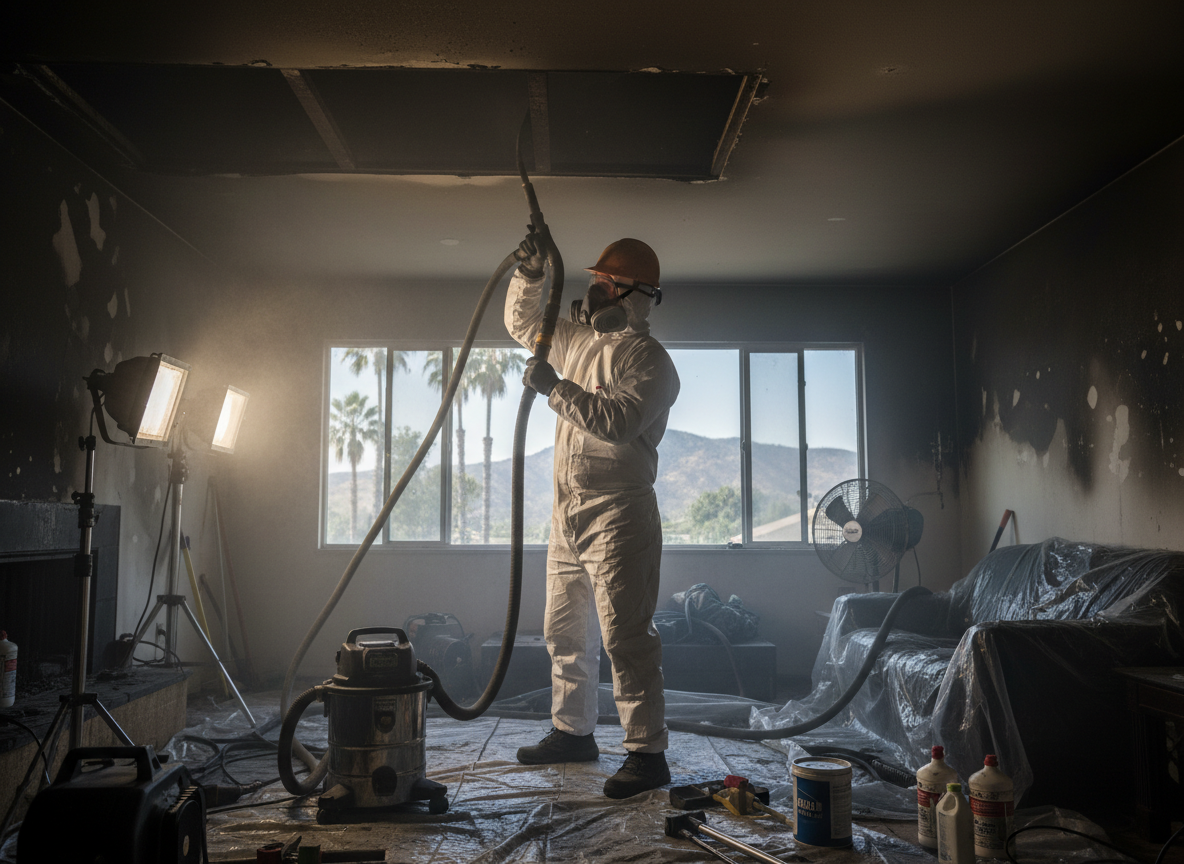
Smoke remediation in Granada Hills requires addressing how soot travels through the ductwork of mid-century ranch homes common in Knollwood and near Granada Hills Recreation Center. Warm Mediterranean summers increase air conditioning use, which can pull smoke particles deeper into insulation and wall cavities if not contained early. Technicians must map airflow patterns from the fire origin point outward, often finding residue on textured ceilings and in attic spaces where older homes lack modern vapor barriers.
Los Angeles County building practices from the 1960s and 1970s mean many Granada Hills properties have lath-and-plaster or early drywall that absorbs odors differently than newer construction in Porter Ranch. Remediation crews use negative air machines positioned at exterior vents to prevent cross-contamination into neighboring units, a frequent issue on streets bordering O'Melveny Park where homes sit close together on sloped terrain. Skipping this step often leaves a persistent smell that returns after the first rain.
Materials matter on the ground here. Smoke from structure fires bonds to the porous stucco exteriors typical in Mission Hills and Northridge border areas, requiring pH-neutral cleaning solutions rather than standard detergents that can etch surfaces. Crews test residues on-site because hot summer temperatures accelerate chemical reactions between soot and household finishes, turning light smoke damage into permanent discoloration within days if left untreated.
Edge cases include properties near Balboa Boulevard where traffic and wind patterns can reintroduce fine particles after initial cleaning. Proper sealing of HVAC returns and use of hydroxyl generators calibrated for the mild winter humidity levels prevent secondary odors from forming in crawl spaces common under Granada Hills homes built on the area's variable soil.
Technician insight
In Granada Hills, the thing that catches most people out with smoke remediation is how quickly soot bonds to the textured ceilings in 1960s homes once summer heat kicks in. Homeowners often try wiping it themselves and push particles into the plaster, making the job twice as long when we arrive. The sloped lots near O'Melveny Park also let smoke drift upward into attics that many crews overlook.
Knollwood Home After Kitchen Fire
Smoke from a kitchen fire had traveled through the central air system into three bedrooms of a 1968 ranch house. We found heavy residue inside the return ducts and on the acoustic ceiling tiles. After mapping the airflow and setting up containment, we cleaned the ducts, treated the ceilings, and ran air scrubbers for two days. The family moved back in without any lingering smell.
How it works
- 1
Initial Assessment
Technicians inspect affected rooms, HVAC systems, and attic spaces in the Granada Hills property to identify all smoke migration paths.
- 2
Containment Setup
Plastic barriers and negative air units isolate the work zone to stop soot from moving into unaffected areas like those near Knollwood.
- 3
Surface and Air Cleaning
HEPA vacuums, specialized sponges, and air scrubbers remove particles from walls, ceilings, and ductwork without damaging original finishes.
- 4
Odor Neutralization
Thermal fogging or hydroxyl treatment targets embedded odors in insulation and porous materials common to local homes.
- 5
Final Verification
Air quality testing and visual inspection confirm no residue remains before the home is returned to normal use.
Pricing
Pricing varies by square footage affected, number of rooms, and whether HVAC cleaning is required; contact for an on-site assessment.