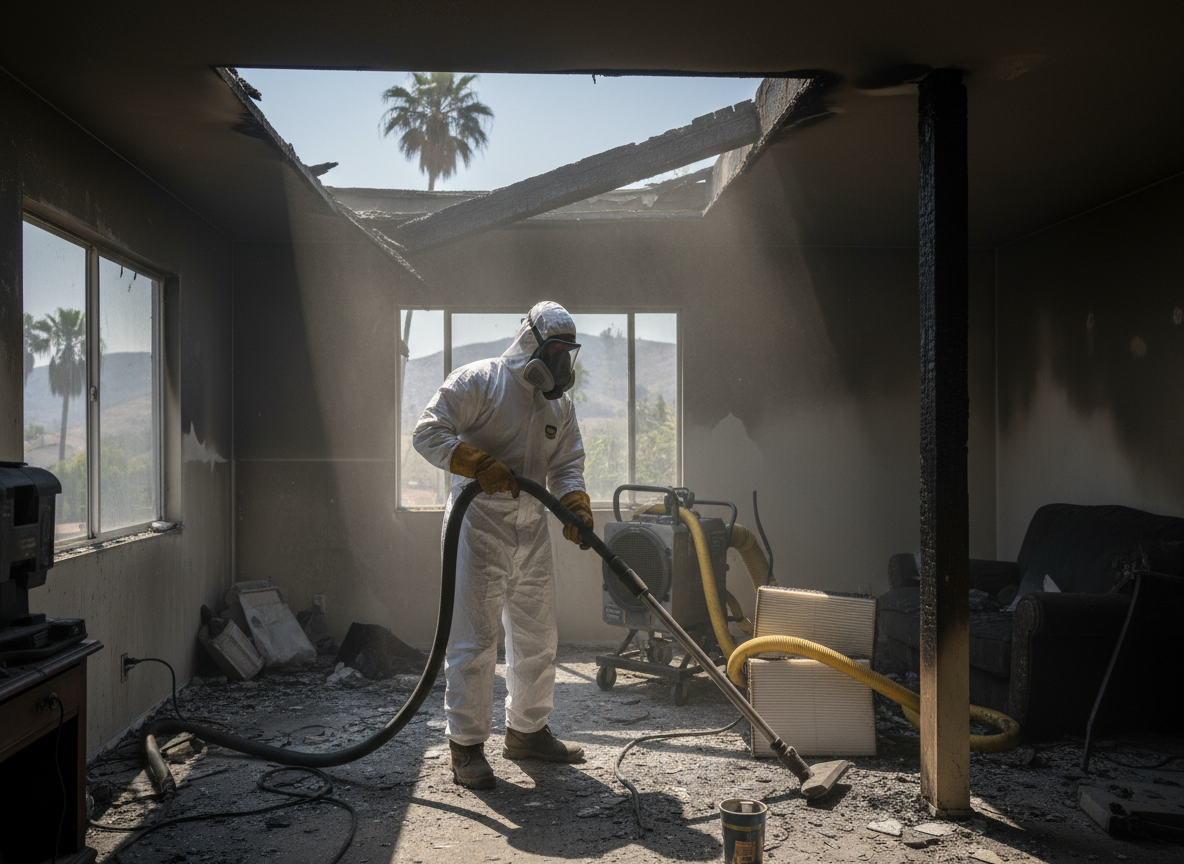
Granada Hills homes, many built in the 1950s and 1960s with stucco exteriors and lath-and-plaster interiors, trap smoke particles deeply into porous surfaces after a fire. Hot summer temperatures combined with dry Santa Ana winds push soot through HVAC systems and into attics common in single-family houses near O'Melveny Park and the Granada Hills Recreation Center. Technicians must remove charred insulation and treat residue on concrete slabs that can hold odors for months if not addressed with proper alkaline cleaners.
Knollwood neighborhoods often feature split-level layouts where smoke travels upward through stairwells and into second-story bedrooms, requiring targeted cleaning of textured ceilings that standard methods miss. Mild winters keep windows closed longer, allowing acidic smoke to etch glass and metal fixtures. Crews working from the Balboa Blvd base respond across Los Angeles County, using air scrubbers sized for the larger square footage typical of Porter Ranch and Mission Hills properties.
Edge cases include residue on redwood decks and fences that border open space, where embers can reignite if not fully neutralized. Older electrical wiring in Granada Hills homes demands careful inspection before cleaning begins to avoid hidden corrosion. All work follows Los Angeles County guidelines for disposal of contaminated materials to prevent groundwater issues in the region's variable soil conditions.
Technician insight
In Granada Hills, the thing that catches most people out with Fire damage clean up is how smoke travels through the unsealed stucco and into the crawlspaces of 1960s homes near Knollwood, especially after summer fires when low humidity lets residue dry and re-entrain weeks later.
Smoke Infiltration After Brush Fire Near O'Melveny Park
A Granada Hills residence backing up to open space showed heavy soot on interior walls after embers entered through attic vents. Inspection revealed residue throughout the HVAC and on plaster ceilings in multiple rooms. Crews contained the space, removed affected insulation, cleaned all surfaces, and treated for odor before final testing.
How it works
- 1
Initial Assessment
Inspect affected rooms, HVAC, and structural elements to map smoke migration patterns common in Granada Hills homes.
- 2
Containment Setup
Isolate damaged areas with plastic barriers and negative air machines to stop soot spread to unaffected spaces.
- 3
Soot And Ash Removal
Use HEPA vacuums and alkaline sponges on walls, ceilings, and contents before any water-based cleaning begins.
- 4
Odor Neutralization
Apply thermal fogging or ozone treatment calibrated for the dry climate to reach hidden cavities in older drywall.
- 5
Final Clearance
Test air quality and surfaces, then coordinate with insurance for documentation before returning the property.
Pricing
Pricing varies by square footage affected, depth of smoke penetration, and whether HVAC or insulation requires replacement.