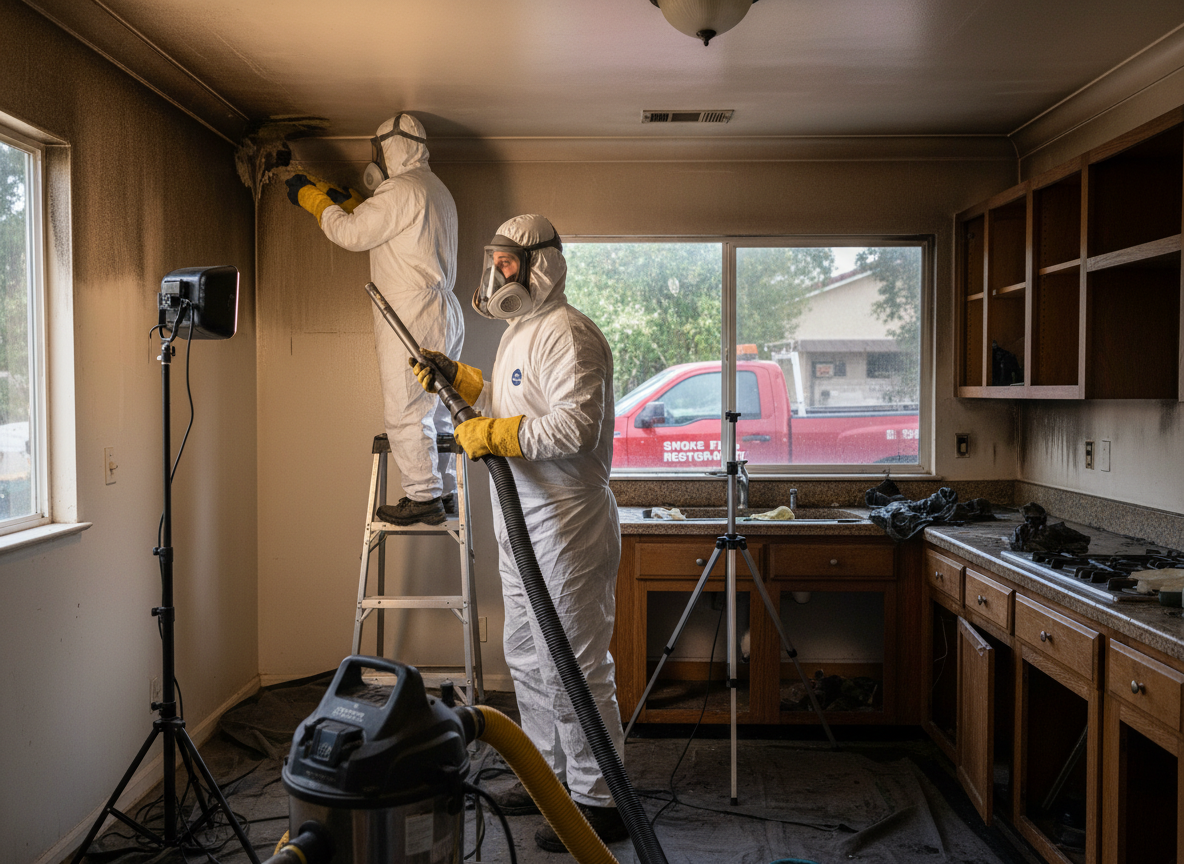
Smoke from structure fires in Granada Hills often travels through the crawl spaces and attic vents common in the area's 1950s and 1960s ranch homes. Residues settle on insulation, ductwork, and porous surfaces like drywall and wood framing. In the warm Mediterranean climate, hot summer days can reactivate odors that seemed cleared during milder winter months, requiring repeated thermal fogging or ozone treatments to neutralize.
Technicians working near O'Melveny Park or the Granada Hills Recreation Center frequently encounter smoke migration into neighboring properties because of the hillside terrain and prevailing winds. Standard HEPA air scrubbing alone rarely suffices when soot has bonded to textured ceilings or cabinet interiors. Full removal often means disassembling HVAC systems and treating or replacing affected duct runs that run through shared walls in Knollwood tract homes.
Los Angeles County building codes require documentation of smoke residue removal before re-occupancy in many cases. Crews document every surface cleaned and test for remaining particulates using moisture meters and chemical indicators. Failure to address hidden pockets behind baseboards or in electrical boxes leads to recurring smells once the home is closed up again during mild winter evenings.
Technician insight
In Granada Hills the thing that catches most people out with smoke damage restoration is how quickly residues travel through the open attics of 1950s ranch homes when Santa Ana winds push air from the hills. Homeowners often think wiping visible surfaces is enough, but the real work is pulling insulation and treating duct runs that run between Knollwood properties.
Smoke in a Knollwood Ranch Home
A kitchen fire sent smoke through the attic of a 1962 Granada Hills home. Inspection showed soot had entered HVAC ducts and settled on insulation above bedrooms. Crews removed contaminated insulation, cleaned the full duct system, and applied odor treatment before reinstalling new material and clearing the property for re-occupancy.
How it works
- 1
Initial Assessment
Inspect all affected rooms, HVAC, and attic spaces to map smoke travel paths specific to Granada Hills construction.
- 2
Containment and Air Filtration
Set up negative air machines and seal doorways to prevent cross-contamination into unaffected areas like those near Northridge borders.
- 3
Surface Cleaning and Odor Removal
Apply specialized cleaners to walls, ceilings, and contents followed by thermal fogging or ozone to neutralize embedded odors.
- 4
Final Clearance Testing
Perform air quality and surface testing before returning the property to the homeowner.
Pricing
Cost depends on square footage affected, depth of smoke penetration into insulation and ducts, and whether contents require separate treatment.