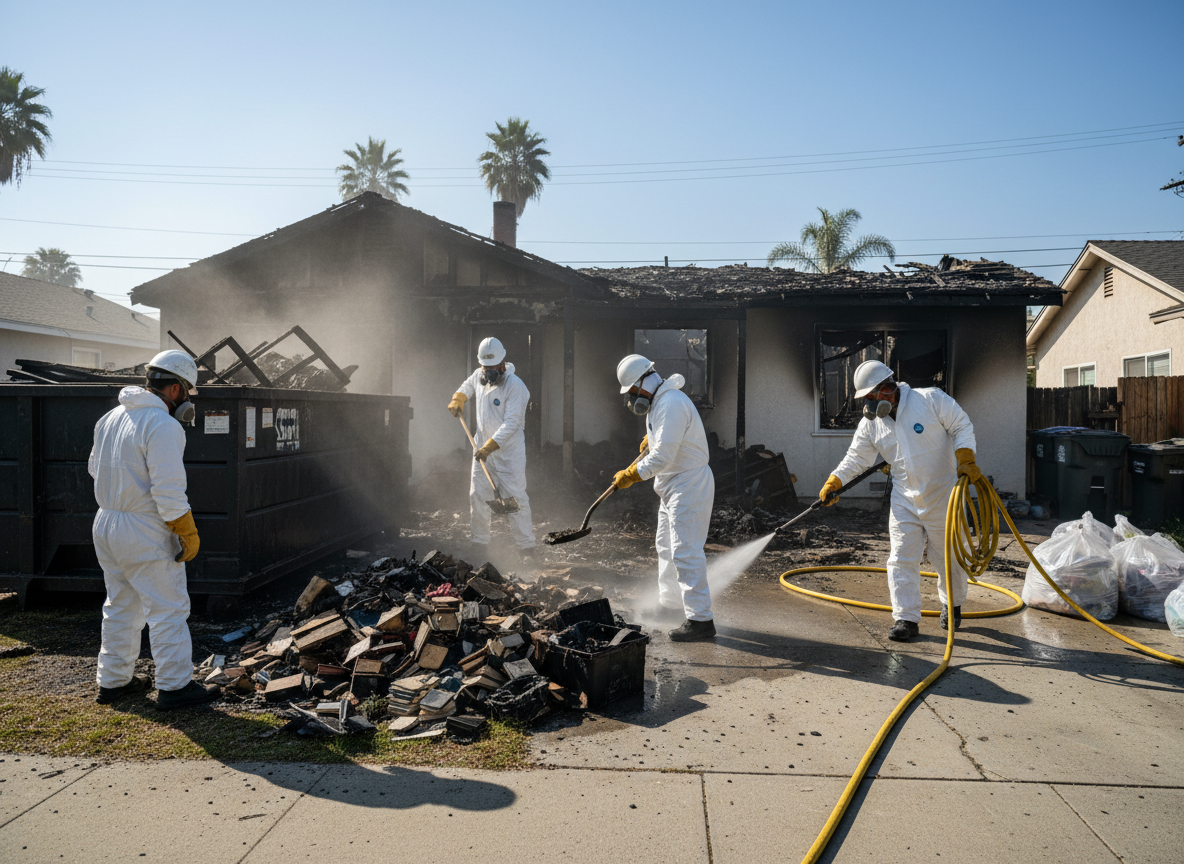
Hoarding situations after a fire in Granada Hills create layered challenges because accumulated items trap soot and accelerate hidden charring in older single-family homes common throughout the neighborhood and Knollwood. Crews must first stabilize the structure while separating salvageable belongings from contaminated debris, all while working around the mild winter temperatures that slow natural drying of water used during suppression. Los Angeles County building codes require proper disposal of burned synthetic materials that release additional toxins when disturbed, so crews document every layer removed to satisfy inspectors before any reconstruction begins.
Smoke migration in these homes often travels through shared walls and attic spaces into neighboring units, especially in the denser pockets near O'Melveny Park. Technicians use negative air machines and thermal imaging to locate residue behind stacked furniture and paper goods that typical cleaning methods miss. Hot summer conditions in the San Fernando Valley can cause rapid re-soiling if ventilation is not managed correctly during the multi-day process, requiring sealed containment zones that protect both the crew and any remaining contents.
Biohazard concerns arise when spoiled food, pet waste, or medical supplies have been stored near ignition points. Granada Hills terrain with its gentle slopes can complicate equipment access on narrow driveways, so smaller skid-steer loaders are often needed instead of full-size machinery. Every job includes odor neutralization using hydroxyl generators rather than ozone when residents plan to return, because the latter can damage certain plastics and fabrics still present in the home.
Technician insight
In Granada Hills the thing that catches most people out with hoarding cleanup after fire is how the dry, brushy slopes around Knollwood properties let embers travel farther and lodge inside stacked materials that then smolder for hours after the main flames are out.
Knollwood Home With Attic Hoard
A fire started in stored boxes in the attic of a 1960s home near O'Melveny Park. We found heavy soot migration into living spaces below and biohazard items mixed with charred debris. Crews removed contents in sealed bags, treated the structure, and cleared the property for reconstruction within five days.
How it works
- 1
Initial Assessment and Safety Walkthrough
Technicians evaluate structural integrity, identify biohazard zones, and establish containment before any material movement begins.
- 2
Selective Debris Removal
Layer-by-layer extraction separates personal items for possible restoration from fire-damaged refuse that must be hauled to approved Los Angeles County facilities.
- 3
Smoke and Odor Remediation
HEPA filtration, thermal fogging, and hydroxyl treatment address embedded residues in walls, ceilings, and remaining contents.
- 4
Final Clearance and Documentation
Air quality testing and photo records confirm the space meets habitability standards for return or contractor handoff.
Pricing
Scope depends on volume of contents, extent of hidden damage, and disposal requirements. Upfront written quotes provided after assessment.