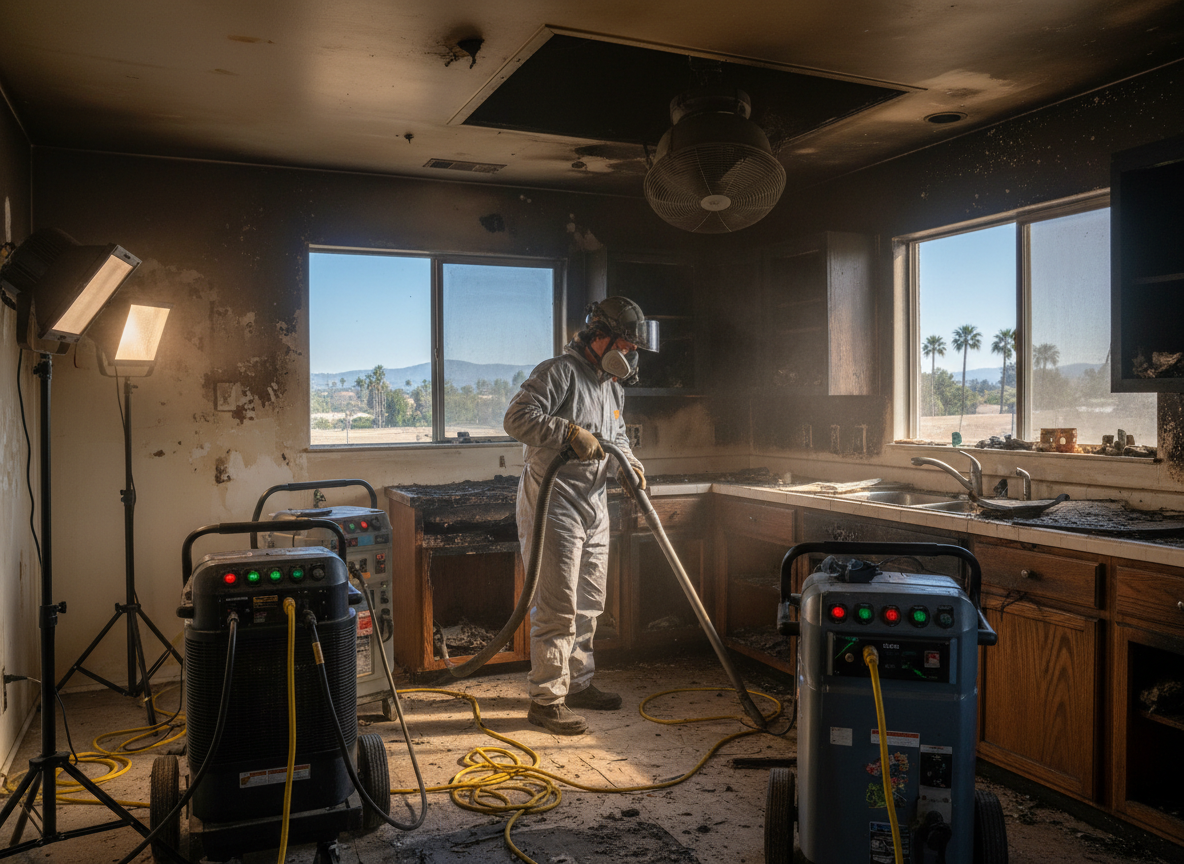
Granada Hills and Knollwood homes, many built in the mid-century with stucco exteriors and wood-frame construction common throughout Los Angeles County, present unique challenges after fire events. Smoke travels easily through shared attics and older HVAC systems that were never designed with modern sealing standards. Hot summer temperatures accelerate chemical reactions in soot residues, turning acidic deposits that etch surfaces faster than in milder coastal zones. Crews must account for these conditions when deciding between surface cleaning and full material removal near landmarks like O'Melveny Park.
Mild winters in the area mean residents keep windows closed more often, trapping smoke odors inside for weeks after an incident. This is especially true in single-story ranch homes where ductwork runs through crawl spaces that collect moisture from occasional winter rains. Restoration teams test for hidden moisture pockets that can lead to mold once temperatures rise again. Work near Granada Hills Recreation Center often requires coordination with local traffic patterns and park-adjacent properties that limit equipment staging.
Nearby cities such as Northridge, Porter Ranch and Mission Hills share similar housing stock and Mediterranean climate patterns, so crews routinely cross service boundaries when a fire affects multiple blocks. Edge cases include properties on sloped terrain where runoff during restoration can carry soot into storm drains, triggering additional environmental protocols. Every job begins with documenting pre-existing wear typical of 1960s-1970s builds so homeowners understand what is new damage versus normal aging.
Technician insight
In Granada Hills, the thing that catches most people out with Fire damage restoration near me is how mid-century ranch homes in Knollwood trap smoke in unsealed attic spaces and older ductwork; the hot summers here turn soot acidic within days, so waiting even 48 hours often turns a surface clean into full ceiling replacement.
Smoke Migration After Neighboring Fire
Smoke from a garage fire entered a Knollwood home through shared attic vents. Inspection revealed soot throughout the HVAC and inside wall cavities. Crews contained the area, cleaned all ducts and surfaces, then verified air quality before the family moved back in.
How it works
- 1
Initial Assessment
Technicians arrive within hours, document all affected areas in Granada Hills and surrounding neighborhoods, and test for hidden smoke penetration in attics and HVAC systems.
- 2
Containment and Safety
Secure the structure, set up negative air machines, and protect unaffected rooms before any cleaning begins to prevent cross-contamination.
- 3
Soot and Smoke Removal
Use specialized equipment to clean surfaces, ducts, and contents while monitoring for acidic soot reactions common in warm local weather.
- 4
Restoration and Verification
Repair or replace damaged materials, deodorize, and conduct final air quality checks before returning the home to the owner.
Pricing
Project costs depend on square footage affected, materials involved, and whether HVAC cleaning or structural repairs are required; upfront quotes provided after inspection.