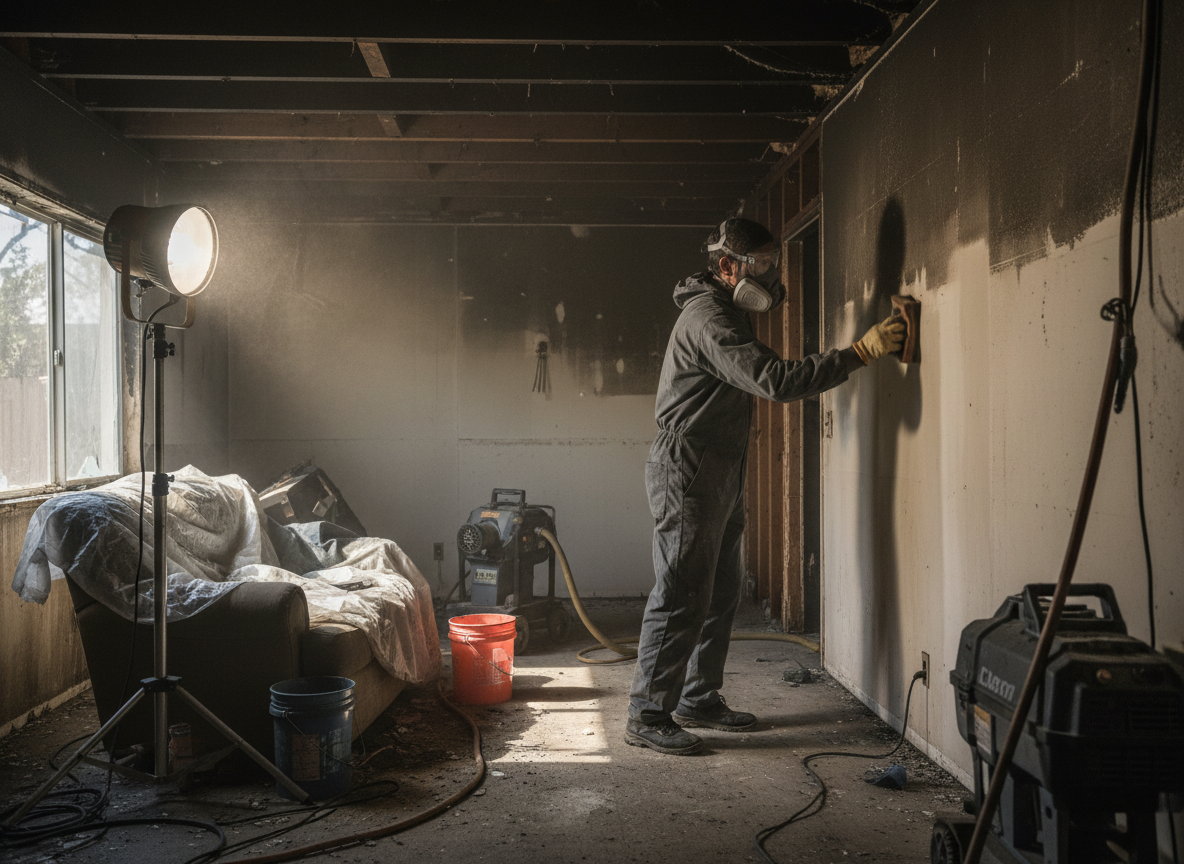
Granada Hills homes built in the 1950s and 1960s often feature plaster walls and original ductwork that allow smoke to travel far beyond the fire origin. Hot summer temperatures dry out materials quickly, locking in odors if not addressed within the first 48 hours. Crews working near O'Melveny Park must also account for hillside access and wind patterns that can carry soot into neighboring properties in Knollwood.
Mild winters leave many attics and crawl spaces under-ventilated, so residual smoke lingers in insulation and framing long after visible soot is gone. Los Angeles County building codes require specific air filtration and disposal procedures for charred materials, and older electrical systems in these neighborhoods can complicate safe power restoration after a fire. Proper containment prevents cross-contamination into unaffected rooms.
Smoke from modern synthetic furnishings produces acidic residues that etch metal fixtures and discolor tile in bathrooms and kitchens common to Granada Hills ranch homes. Technicians test pH levels on surfaces before choosing cleaners, because aggressive products can damage original hardwood floors or stucco exteriors. Final clearance testing confirms odor removal before homeowners return.
Technician insight
In Granada Hills, the thing that catches most people out with fire and smoke damage restoration is how smoke travels through the original galvanized ductwork in 1950s ranch homes near the Granada Hills Recreation Center, especially when hot summer winds pull residues deeper into wall cavities before we arrive.
Attic Fire Smoke in Knollwood
A homeowner near O'Melveny Park reported smoke after an attic electrical fire. We found soot throughout the HVAC trunk lines and behind original plaster walls. Crews sealed the system, cleaned all accessible surfaces with non-acidic agents, and ran continuous air filtration until clearance tests passed.
How it works
- 1
Emergency Assessment
Technicians arrive within hours, document the affected areas, and identify hidden smoke paths through walls and HVAC systems.
- 2
Containment and Safety
Plastic barriers and negative air machines isolate damaged zones while crews secure utilities and remove hazardous debris.
- 3
Cleaning and Odor Removal
Specialized equipment and pH-neutral solutions clean surfaces, ducts, and contents; thermal fogging neutralizes embedded smoke odors.
- 4
Restoration and Verification
Repairs restore structural elements, followed by independent air quality testing before final walkthrough with the homeowner.
Pricing
Upfront written estimates provided after inspection; final cost depends on square footage affected, materials involved, and whether HVAC cleaning is needed.