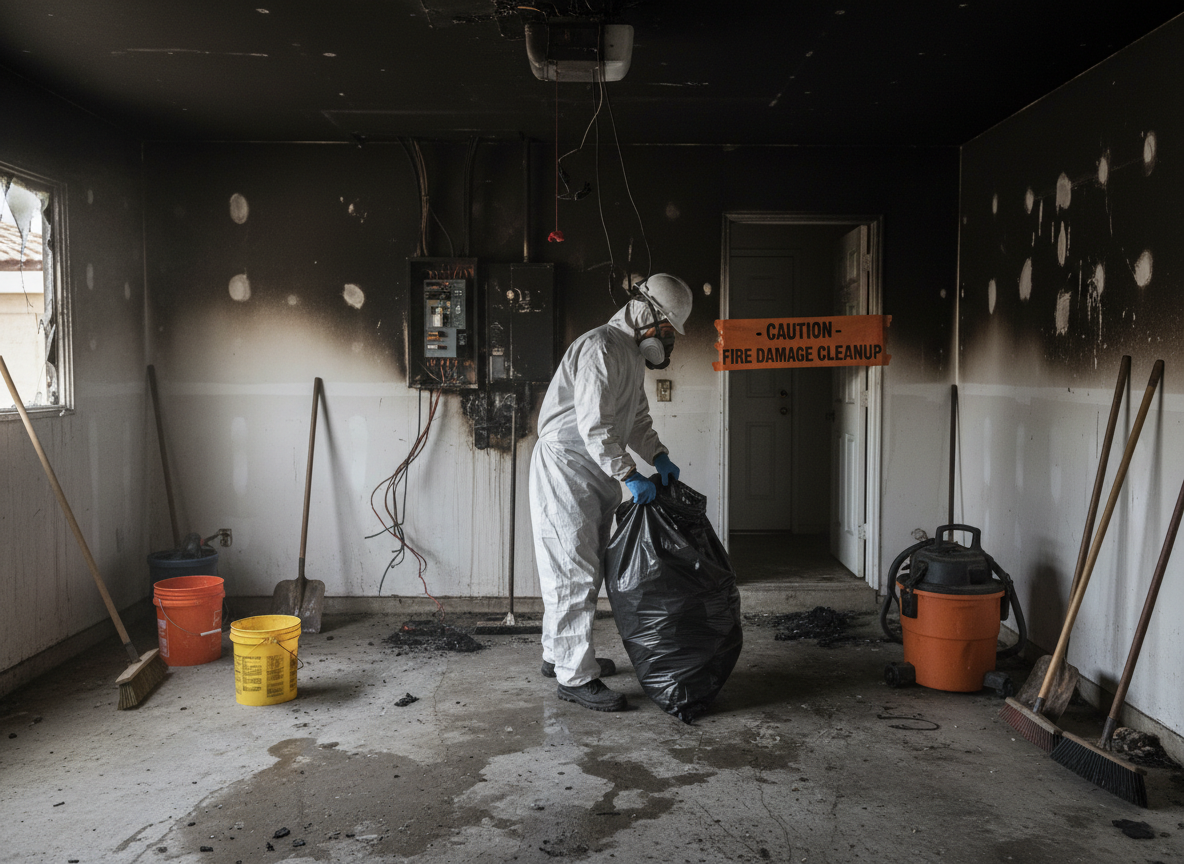
Electrical fires in Granada Hills often start from overloaded circuits or aging wiring in homes built during the 1950s through 1970s. These properties, common near Granada Hills Recreation Center and in Knollwood, frequently contain aluminum wiring that reacts poorly with acidic soot. Cleanup requires isolating affected circuits before any vacuuming or chemical neutralization begins, or else residual particles can cause new shorts once power is restored. Technicians must also check attic insulation and wall cavities where embers can linger undetected in the area's dry Mediterranean summers.
Soot from electrical fires bonds tightly to metal fixtures and HVAC ducts, especially in homes close to O'Melveny Park where dust from the terrain adds to the residue. Standard HEPA filtration alone does not remove the conductive film left on copper or aluminum lines, so specialized degreasers and pH-neutral cleaners are applied section by section. Failure to treat these surfaces allows corrosion to continue, raising the risk of repeated failures during mild winter rains when moisture enters the structure.
Los Angeles County building codes require verification that all repaired circuits meet current grounding standards before final clearance. In Granada Hills this often means pulling permits for panel upgrades when aluminum wiring is present, a step many homeowners overlook after an electrical fire. Crews document every junction box opened and every run tested so future inspectors have clear records. Work stops only after independent verification that no measurable conductivity remains on cleaned surfaces.
Response teams based at 11118 Balboa Blvd operate 24/7 to limit smoke migration into unaffected rooms. Quick arrival prevents soot from settling into carpet and furniture common in Northridge and Porter Ranch border homes, where open floor plans allow rapid spread. Each job includes sealing off HVAC returns and using negative air machines sized for the square footage involved.
Technician insight
In Granada Hills, the thing that catches most people out with Electrical fire cleanup is aluminum wiring in homes built before 1970 around Knollwood and O'Melveny Park. Soot creates a conductive film that keeps causing trips long after the fire is out, and the dry summer air plus occasional winter moisture accelerates corrosion inside walls if the film is not fully removed.
Knollwood Home Electrical Fire
A 1962 ranch in Knollwood lost power after an outlet short. Inspection found soot throughout the attic and on aluminum branch wiring. Crews isolated the panel, cleaned every junction, and treated the ducts. The home passed conductivity tests and was returned to service without further outages.
How it works
- 1
Initial Assessment
Technicians isolate the electrical panel and map every affected circuit while wearing PPE to avoid contact with conductive soot.
- 2
Containment Setup
Plastic barriers and negative air machines prevent soot from moving into clean zones of the Granada Hills home.
- 3
Soot Removal
HEPA vacuums followed by pH-balanced degreasers lift residue from wiring, outlets, and fixtures without spreading particles.
- 4
Hidden Damage Check
Attics, wall cavities, and ductwork are inspected for lingering embers or corrosion on older aluminum lines.
- 5
Final Verification
Circuits are tested for conductivity and the home is cleared only after all surfaces meet safety thresholds.
Pricing
Cost depends on number of circuits affected and extent of hidden damage; upfront written quotes follow on-site inspection.