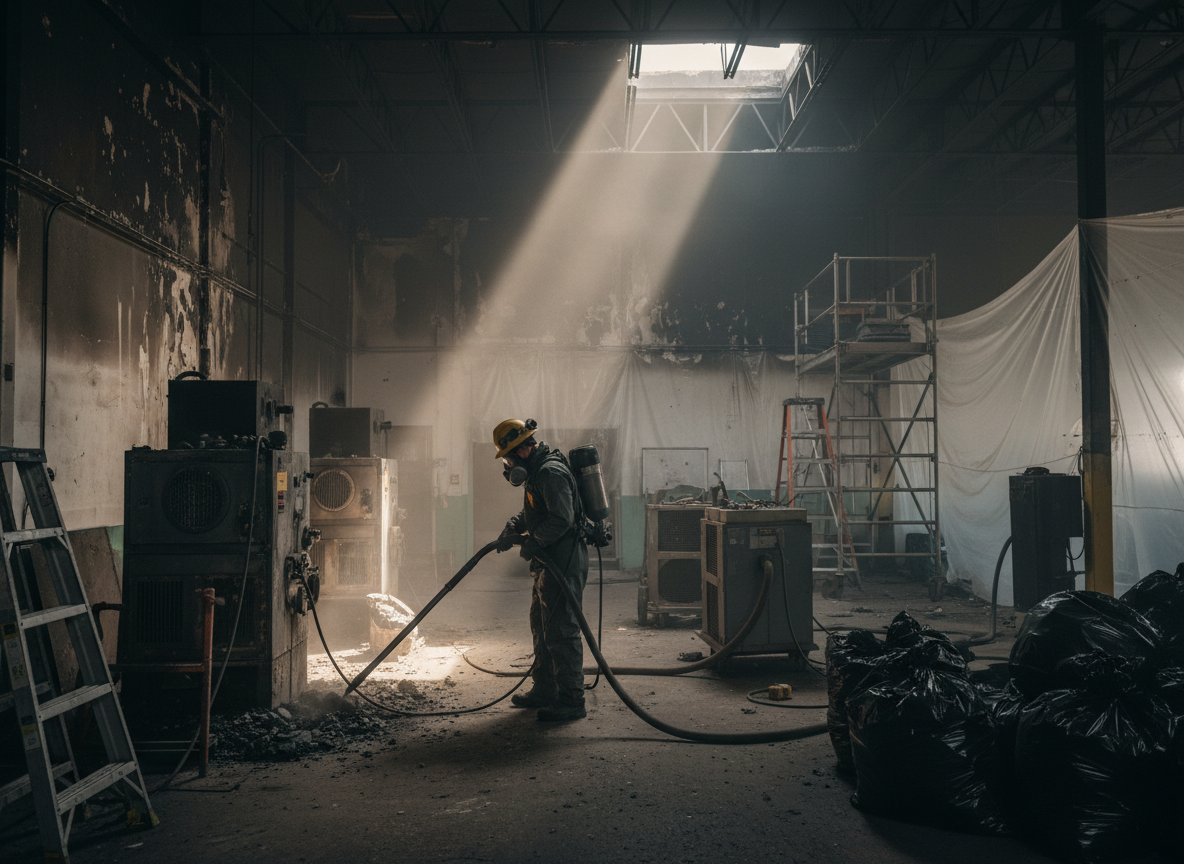
Commercial buildings in Granada Hills often feature mixed construction with older masonry and newer steel-frame additions, especially near Knollwood and along Balboa Boulevard corridors. Hot Mediterranean summers drive rapid soot adhesion to HVAC ducts and concrete surfaces, while mild winters allow lingering moisture from suppression water to foster mold in wall cavities if not addressed quickly. Los Angeles County fire codes require full documentation of electrical and plumbing upgrades after significant burns, and overlooking hidden char in drop ceilings has delayed reopenings in Porter Ranch retail spaces.
Smoke travels differently through the open layouts common in Mission Hills commercial properties, carrying acidic residues that corrode metal fixtures and HVAC coils faster than in residential settings. Technicians must isolate zones early because prevailing winds from the north can push particulates into adjacent suites at O'Melveny Park edges. Proper neutralization of porous materials like acoustic tiles prevents recurring odors that trigger tenant complaints months later.
Edge cases include restaurants where grease-laden smoke bonds to stainless surfaces and requires specialized degreasers, or medical offices needing HEPA filtration to meet air-quality standards before occupancy. Upfront quotes based on square footage and material types avoid surprises when Los Angeles County inspectors require additional seismic bracing after ceiling removals.
Post-Fire HVAC Considerations
Commercial HVAC systems in Granada Hills spread smoke through shared ducts more aggressively during summer heat, demanding line-by-line cleaning and filter replacement before any re-energizing. Technicians test static pressure and carbon levels to confirm no residual odors remain in return air paths serving multiple tenants.
Technician insight
In Granada Hills the thing that catches most people out with Commercial fire restoration is how hot summer days pull acidic soot deep into the unsealed concrete block walls common in 1970s Knollwood strip centers, so if you skip the initial neutralization step the odor returns every time the AC cycles.
Knollwood Retail Strip Smoke Event
A fire started in one tenant's storage area and sent smoke through shared ductwork into three adjacent suites. We found heavy residue inside the rooftop units and behind drop ceilings. Containment, full HVAC cleaning, and surface neutralization restored air quality within five days and allowed all businesses to reopen without further complaints.
How it works
- 1
Site Assessment
Walk the commercial property with the owner to map burn patterns, test air quality, and identify affected HVAC zones in Granada Hills structures.
- 2
Containment and Safety
Erect barriers and negative air machines to prevent cross-contamination into unaffected suites while securing utilities.
- 3
Soot and Residue Removal
Apply pH-neutral cleaners to masonry, metal, and acoustic surfaces followed by HEPA vacuuming of all porous materials.
- 4
Structural Drying and Repair
Extract standing water, dry wall cavities, then replace charred framing and reinstall code-compliant electrical runs.
- 5
Final Clearance
Conduct air sampling and walkthrough with the building owner to confirm the space meets Los Angeles County occupancy standards.
Pricing
Pricing depends on building size, materials affected, and extent of HVAC involvement; we provide detailed upfront quotes after the initial assessment.