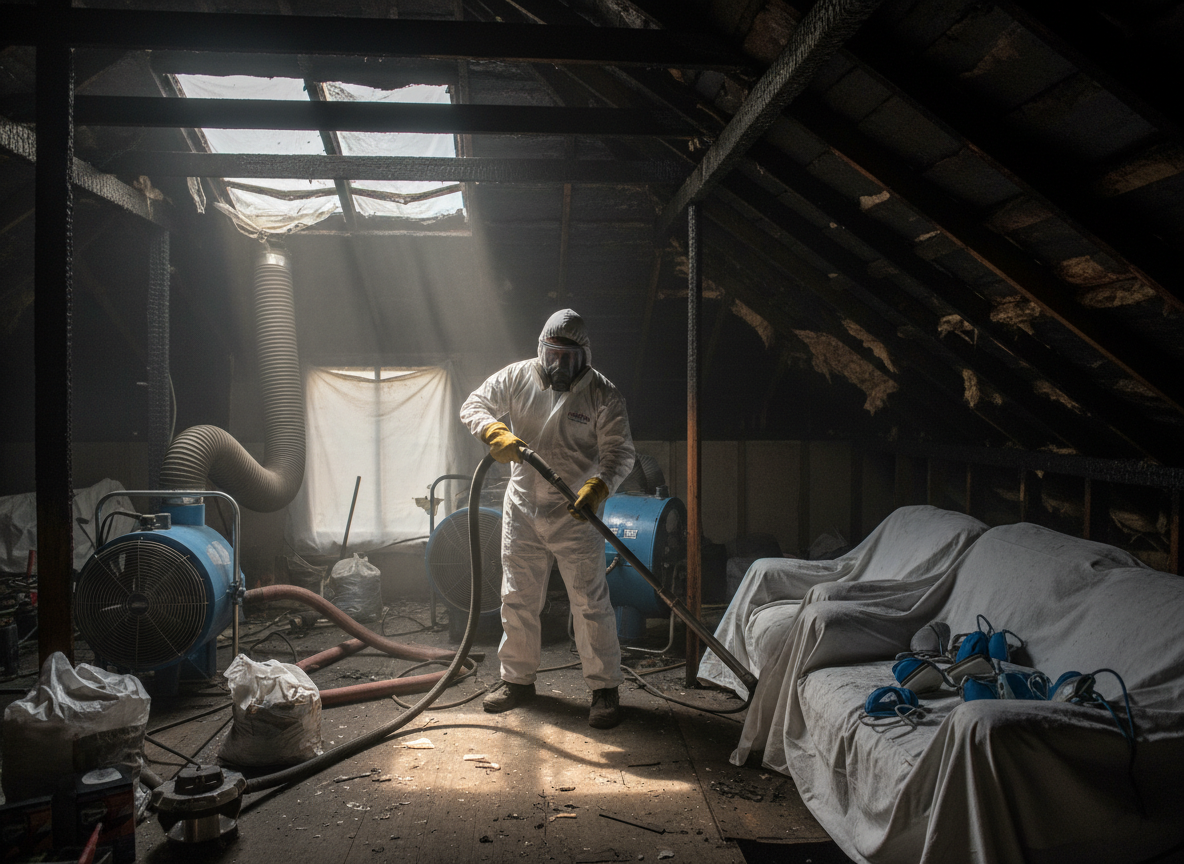
Attic fires in Granada Hills often start from overloaded circuits in mid-century homes or embers drifting from nearby brush in O'Melveny Park during hot summer months. The warm Mediterranean climate keeps attics dry most of the year, allowing soot to penetrate fiberglass batts and older cellulose insulation quickly. Crews must pull back drywall at the top plates and inspect rafters for char that can run the full length of the roof deck before any reconstruction begins.
Knollwood properties built on sloped lots frequently have limited ridge vent access, which traps smoke and forces technicians to cut additional inspection ports. Los Angeles County code requires new insulation to meet current R-value standards after fire damage, so crews replace damaged sections rather than attempting spot cleaning. Hidden knob-and-tube wiring common in these neighborhoods adds extra steps because any disturbance triggers full electrical upgrades before insulation can be reinstalled.
Porter Ranch and Mission Hills homes share similar rooflines, but Granada Hills lots often back up to steeper terrain that channels wind during Santa Ana conditions. This increases the chance that smoke migrates into wall cavities below the attic, requiring negative-pressure sealing at the recreation center area homes where stucco exteriors make leak detection slower. Final clearance testing focuses on air sampling inside the attic space rather than living areas to confirm no residual particulates remain.
Technician insight
In Granada Hills the thing that catches most people out with attic fire restoration is how quickly smoke travels into wall cavities in the older stucco homes around O'Melveny Park during our hot summers, so you end up opening far more drywall than the visible burn suggests.
Hidden Ember Trail in Knollwood Attic
Homeowner reported a small electrical fire near the ridge vent. Inspection revealed char running twelve feet along rafters into cellulose insulation that had not been disturbed. Crews removed the affected insulation, treated the framing, and replaced sections to meet current county standards while keeping the rest of the attic intact.
How it works
- 1
Initial Assessment
Technicians arrive 24/7 at the Granada Hills address and map all affected rafters, insulation types, and electrical runs before any debris removal.
- 2
Containment and Soot Removal
Negative air machines isolate the attic while HEPA vacuuming and chemical sponges lift soot from wood and wiring without spreading particles into living spaces below.
- 3
Hidden Damage Inspection
Infrared scans and selective drywall removal check for ember trails along top plates, especially in Knollwood homes with older insulation.
- 4
Repair and Code Updates
Replace charred framing, upgrade insulation to current Los Angeles County standards, and restore ventilation before final air quality clearance.
Pricing
Cost depends on attic size, insulation type, and extent of hidden char; older Granada Hills homes with limited access typically require more inspection time.