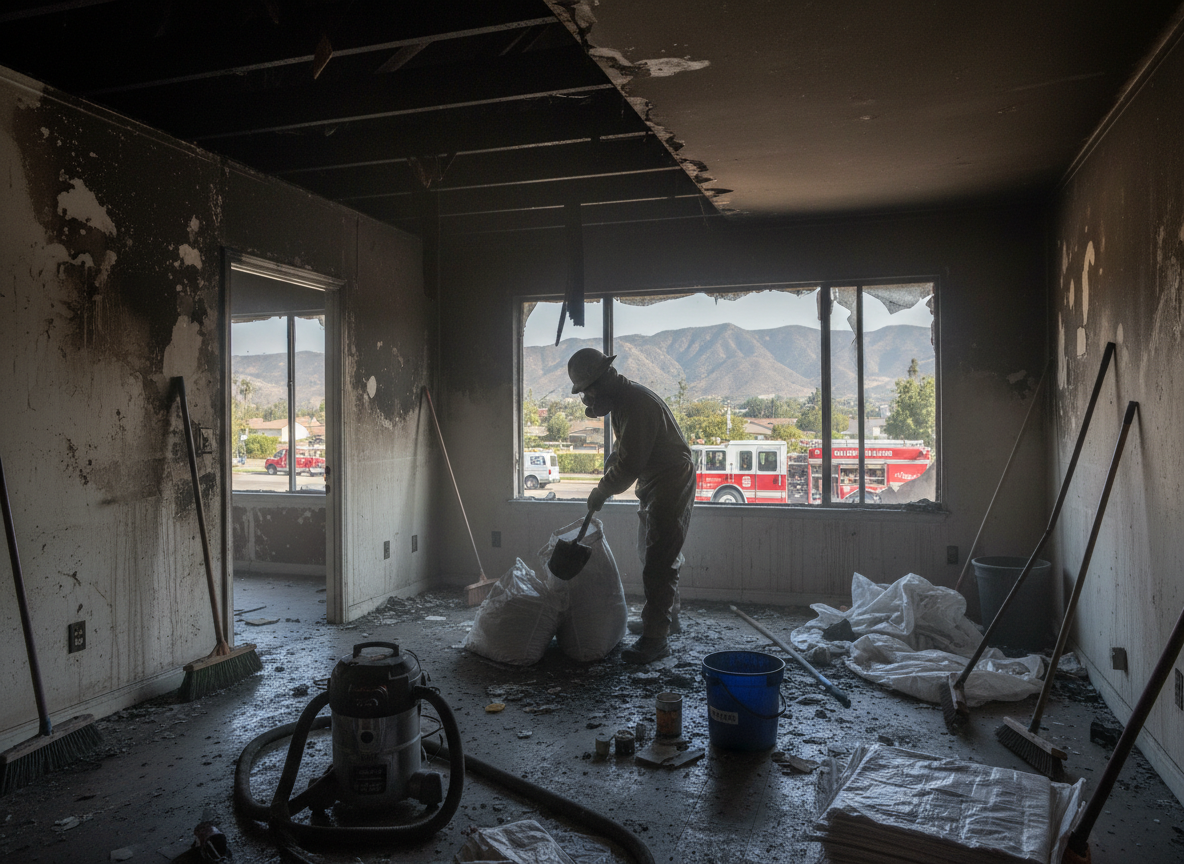
Apartment fire cleanup in Granada Hills often involves older multi-unit buildings where smoke migrates through shared HVAC ducts and wall cavities, especially in complexes around Granada Hills Recreation Center. The warm Mediterranean climate brings hot, dry summers that accelerate soot adhesion to surfaces like plaster and wood trim common in local 1960s-era apartments. Technicians must address both visible residue and invisible acidic particles that can corrode metal fixtures and electronics if left untreated. Working within Los Angeles County regulations requires coordinating with property managers to limit disruption to neighboring units in Knollwood and nearby Porter Ranch.
Edge cases frequently arise when fires start in one unit but affect adjacent apartments through ventilation shafts or attics. In Mission Hills and Northridge border areas, soil conditions and mild winters can leave moisture trapped behind walls after suppression efforts, promoting mold alongside smoke damage. Specialized HEPA filtration and odor-neutralizing agents are required rather than standard cleaning, and crews must document every step for insurance adjusters handling claims across Los Angeles County. DIY attempts using household products often drive residues deeper into porous materials like carpet padding and drywall.
Restoration crews prioritize containment barriers and negative air pressure to prevent cross-contamination between units. Concrete specifics such as the age of electrical systems in Granada Hills apartments influence whether wiring needs replacement after exposure to corrosive smoke. Final clearance testing ensures no lingering odors remain before tenants return, accounting for the fact that many buildings here lack modern fire-rated separations.
Technician insight
In Granada Hills, the thing that catches most people out with Apartment fire cleanup is how smoke travels through the shared ventilation systems in older apartment complexes near O'Melveny Park, especially during our warm Mediterranean summers. Homeowners often overlook hidden residues in Knollwood units that reappear weeks later if ducts are not thoroughly cleaned.
Kitchen fire affecting two units
A cooking fire in a Granada Hills apartment spread smoke through the HVAC to the unit below. Inspection revealed soot throughout vents and wall cavities. Crews set up containment, cleaned all surfaces and ducts with specialized agents, then neutralized odors. Both units passed clearance testing and were returned to use without further issues.
How it works
- 1
Initial Assessment
Technicians inspect all affected units and shared systems for smoke migration paths and hidden damage.
- 2
Containment and Safety Setup
Barriers and air scrubbers isolate the work area while protecting neighboring apartments.
- 3
Soot and Residue Removal
Specialized equipment extracts acidic particles from surfaces, ducts, and contents.
- 4
Odor Neutralization and Restoration
Thermal fogging and sealing address lingering smells before repairs and final testing.
Pricing
Pricing depends on the number of units affected and extent of smoke migration; upfront quotes provided after inspection.