2026-10-17 ·
What To Expect When Wildfire Smoke Enters Granada Hills Homes
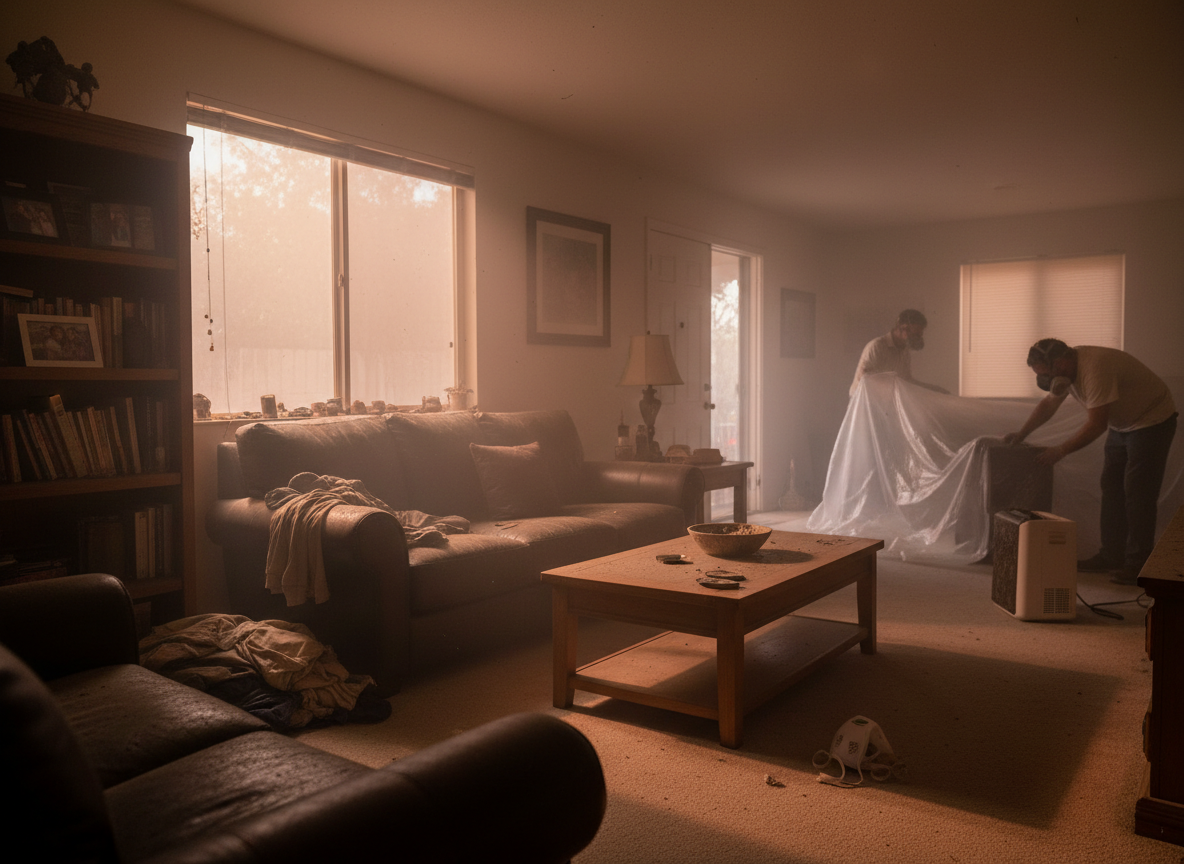
Wildfire smoke enters Granada Hills homes through HVAC intakes, window gaps, and attic vents common in the area's mid-century housing stock, often depositing fine particles that remain for weeks even after outdoor air clears. In Los Angeles County neighborhoods like Knollwood, the warm Mediterranean climate with hot summers allows smoke to settle deeper into porous materials before mild winter rains arrive and complicate drying. Residents near Granada Hills Recreation Center or O'Melveny Park notice odors and discoloration faster because prevailing winds carry particulates from the Angeles National Forest directly into these valleys.
Smoke Movement Through Granada Hills Construction
Granada Hills homes built before 1970 often feature single-pane windows and unsealed attic spaces that allow smoke to bypass basic weatherstripping. During hot summer days when residents run air conditioning, negative pressure pulls particles indoors faster than in newer Porter Ranch builds. The same pattern repeats in Mission Hills and Northridge, where older ductwork carries smoke throughout the house instead of exhausting it. Once inside, the particles cling to insulation, drywall, and carpet fibers, creating layers that standard household vacuums cannot remove. Homeowners who open windows during the first 48 hours after a nearby fire report heavier deposits on north-facing walls because afternoon winds push smoke through those exposures.
Surface and Air Quality Changes in Local Conditions
Fine ash from regional fires mixes with household dust in Granada Hills, forming a gritty film on hard surfaces that scratches when wiped without proper technique. In the mild winters typical here, trapped moisture under that film slows natural off-gassing and keeps odors present longer than in drier inland areas. Electronics and fabric furniture absorb the smell quickly because the region's low humidity during Santa Ana events lets particles penetrate deeper into foams and textiles. Air quality inside affected homes can remain elevated for 10–14 days without mechanical filtration, especially in Knollwood properties shaded by mature trees that reduce natural airflow. Testing with handheld particle counters shows counts drop only after HEPA units run continuously for several days.
Assessment and Cleaning Sequence Used Locally
Technicians begin by mapping smoke paths through attics and crawl spaces common in Granada Hills, then isolate HVAC systems to prevent further spread. Smoke damage restoration protocols include removing loose soot with specialized vacuums before any wet cleaning begins. Contents are inventoried room by room, with textiles and upholstery separated for off-site processing when residues have penetrated fibers. Odor removal after fire follows surface cleaning and often requires hydroxyl generators run for 48–72 hours in sealed rooms. Final verification uses both visual inspection and air sampling to confirm particle levels match outdoor baselines before homeowners return. See Handling Ash And Soot From Angeles National Forest Fires In Granada Hills for additional seasonal guidance.
When Professional Intervention Becomes Necessary
Homes within two miles of O'Melveny Park or the Granada Hills Recreation Center often require full HVAC cleaning because smoke travels through shared duct runs in these denser blocks. Delaying action past the first week allows residues to bond with painted surfaces, raising the chance that drywall sections must be replaced rather than cleaned. Properties in Northridge and Porter Ranch that experienced multiple fire seasons show cumulative staining in upper cabinets that only appears after the second or third event. Owners who attempt DIY cleaning with store vacuums frequently spread particles into previously unaffected rooms, extending the timeline. The 24/7 team at 11118 Balboa Blvd responds with equipment sized for these older local homes and coordinates with Los Angeles County air quality guidelines throughout the process.